Tell me what you want to build.
You don't need a full plan. Share the goal and what you have so far, and I'll tell you honestly whether I can help.
I build custom AI agents and assistants for business work. An agent reads what comes in, picks the next step from the tools you allow, and finishes the job. If plain rules will do it cheaper, I'll tell you.
Where's my order?
🤖 It ships tomorrow. Want the tracking link?
Answered from your own order data.
Most jobs need plain rules. Some need an agent. Start with the simpler one.
The same steps every time. Cheap to run, easy to test, and it never makes up an answer. It still needs clean input and correct rules.
Picks its next step from what it reads, using only the tools and limits you approve. It copes with messy requests, costs money each time it runs, and needs checks.
Real cases with their sources, and one from my work.
Examples of jobs that suit an agent. None of these are past projects of mine.
Answers "Where's my order?" and passes the angry customer to a person.
Reads a new ticket, checks past ones and has an answer ready before anyone opens it.
Reads the call transcript, logs the details and drafts the follow-up email.
Finds prospects that match your profile and adds the good ones to your sales list.
Asks a lead a few questions, then books a slot or passes them to sales.
Reads invoices, matches purchase orders and flags the odd ones for approval.
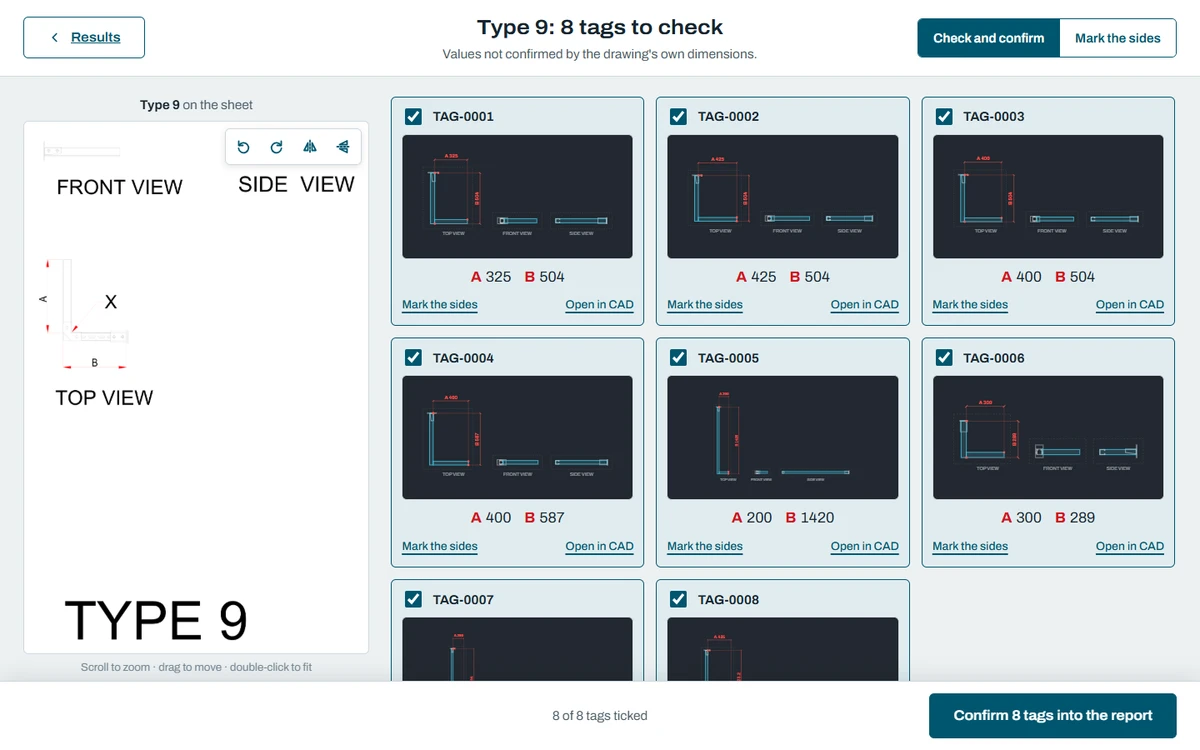
One example from my work: Support Take-off, a tool for engineering drawings, holds back anything it can't prove, gives the reason in plain words, and lets a person decide. It uses plain rules because they did the job. An agent should behave the same way: if it isn't sure, it asks.
Send me the goal, what already exists and where things are stuck.
You get a written scope, timeline and quote before build work starts.
You see working software at each review point, not one big reveal at the end.
I deploy it and walk your team through it. After launch, you get support, or an annual maintenance contract (AMC) for small changes and updates.
It can. Left alone, an AI can give a confident answer with nothing behind it, like a return policy that doesn't exist. So I'd point it at your own documents, limit what it can do, and send unsure cases to a person.
Usually, if it uses an online AI service. We agree what it may see before the build. Sensitive work can stay on plain rules on your own PC. For example, Take-off, a tool I built, works that way.
A chatbot mostly answers questions. An agent can also act, through tools you approve: it updates a record, books a slot or sends a reply. Many products mix the two.
It takes the "Where's my order?" questions. Hard cases go to a person.
You don't need a full plan. Share the goal and what you have so far, and I'll tell you honestly whether I can help.